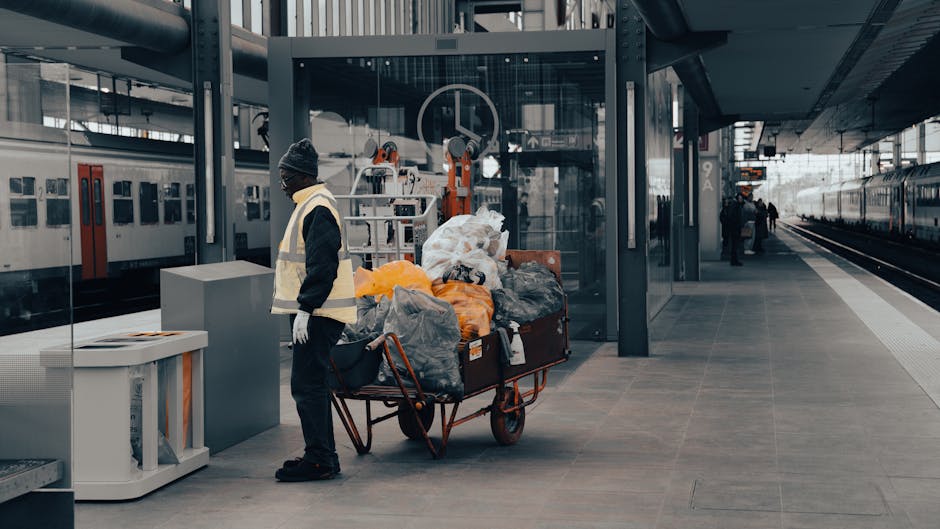
Harlesden station rubbish removal guide for commuters
If you commute through Harlesden station, you already know how quickly a small bit of rubbish can become a real nuisance. A takeaway cup, a broken umbrella, a flat-pack box from a new purchase, or a bag of unwanted clutter picked up on the way home can all end up waiting by the door, in the boot, or in a bike basket for far too long. This Harlesden station rubbish removal guide for commuters is here to make that easier. It explains what the process looks like, when it makes sense, what to avoid, and how to keep things moving without turning a busy day into a weekend chore.
Truth be told, most commuters do not need a dramatic waste solution. They need something efficient, legal, and straightforward. The aim here is simple: help you clear rubbish without stress, keep your journey tidy, and make a sensible choice between dropping off, collecting, or booking a removal service. A bit of planning goes a long way.
Table of Contents
- Why Harlesden station rubbish removal guide for commuters Matters
- How Harlesden station rubbish removal guide for commuters Works
- Key Benefits and Practical Advantages
- Who This Is For and When It Makes Sense
- Step-by-Step Guidance
- Expert Tips for Better Results
- Common Mistakes to Avoid
- Tools, Resources and Recommendations
- Law, Compliance, Standards, or Best Practice
- Options, Methods, or Comparison Table
- Case Study or Real-World Example
- Practical Checklist
- Conclusion
- Frequently Asked Questions
Why Harlesden station rubbish removal guide for commuters Matters
Harlesden is one of those places where life moves fast. Trains, buses, work shifts, deliveries, school runs, and last-minute errands all overlap. That pace matters because rubbish tends to pile up in the gaps: after a move, after an office clear-out, after a flat tidy, or after a few weeks of "I'll sort that later."
For commuters, rubbish removal is not just about getting rid of waste. It is about saving time, avoiding awkward lifting on a busy platform route, and preventing bags from becoming a smell or a fire risk in shared spaces. You will notice that even one overflowing black sack can make a hallway feel cluttered and stressful. Add a couple of boxes, a mattress, or old furniture and suddenly the issue is not minor any more.
It also matters because not every item can simply be left out or dropped anywhere. In London, the wrong disposal choice can create inconvenience for neighbours and can lead to avoidable problems for you later. A planned approach keeps everything cleaner, safer, and easier to manage when you are coming and going from the station.
Expert summary: commuter rubbish removal works best when you match the waste type to the right disposal method, keep the load manageable, and book help before clutter starts disrupting daily routine.
How Harlesden station rubbish removal guide for commuters Works
The basic idea is simple: identify what needs to go, decide how urgent it is, and choose the most practical disposal route. For many commuters, that route is a same-day or pre-booked collection rather than trying to haul everything around on public transport. That sounds obvious, but people still try it. Bags are heavier than they look at 7:30 in the morning, after all.
There are usually three broad ways this works in practice. First, you separate smaller household rubbish from bulkier waste. Second, you check whether anything can be reused, recycled, or needs special handling. Third, you arrange the removal method that fits your timetable and access. If you are dealing with items from a flat, loft, garage, or office, the right service can reduce a messy job to one tidy visit.
This is where services like general waste removal and online booking can be useful. If your rubbish is mostly bulky household items, you may also want to look at furniture disposal or mattress and sofa disposal. For mixed clear-outs, it is often easier to group things by room or item type before collection day.
A small but useful point: commuters often underestimate access. If a van cannot park close enough, the whole job takes longer. If stairs are narrow, the lift is small, or there is no reliable entry time, let the provider know early. That one detail can save a lot of back and forth.
Key Benefits and Practical Advantages
The biggest benefit is time. Most commuters do not have spare hours to do multiple tip runs, carry bags to a distant location, or wrestle with awkward items after a long day. A managed rubbish removal service lets you handle everything in one go. Nice, neat, done.
There is also the peace of mind angle. Proper removal reduces the risk of blocked hallways, unwanted odours, pest attraction, and arguments in shared buildings. In flats near transport links, clutter has a habit of spreading: one bag becomes three, then the bike has nowhere to go, and suddenly the front room feels like a storage cupboard.
Another advantage is the ability to handle different waste streams responsibly. If you are disposing of old household goods, office materials, appliances, or garden waste, separating them properly makes the job cleaner and often more efficient. For example, electrical items may need specialist handling, while a pile of old paperwork may be better managed through confidential shredding rather than being mixed in with general rubbish.
You also get flexibility. That matters for shift workers, hybrid workers, and anyone whose time is chopped into pieces between trains, calls, and family life. A removal arranged around your schedule is usually easier than forcing your day around a skip or a council-style disposal trip.
Who This Is For and When It Makes Sense
This guide is for commuters, but that can mean quite a few different people. Maybe you travel through Harlesden station every weekday and have been meaning to clear your flat for months. Maybe you have just moved into the area and have packaging, old furniture, and "temporary" boxes that are now permanent. Or maybe your workplace has built up unwanted filing, furniture, and office waste and someone has to deal with it. Usually that someone is the person who reads articles like this on the train.
It makes sense if you have one or more of these situations:
- you commute daily and need rubbish removed without disrupting work hours
- you live in a flat, shared house, or converted property with limited storage
- you are moving in or out and have bulk items to clear
- you manage a small office near the station
- you need to clear mixed waste after DIY, decorating, or light refurb work
- you want a safer option than trying to move heavy items yourself
It is especially useful if your waste includes items that are awkward, heavy, or not suitable for a standard bin. Things like old sofas, broken appliances, mattresses, and building debris can be a headache. For those cases, targeted services such as fridge and appliance removal or builders waste clearance may be the smarter route.
Step-by-Step Guidance
Here is a practical way to handle rubbish removal around Harlesden station without overcomplicating it.
- Sort what you have. Group items into general rubbish, reusable items, bulky furniture, electricals, and anything potentially hazardous. This helps you avoid mixing waste that should be handled separately.
- Measure the volume. You do not need an exact science project here. Just work out whether it is a few bags, a room's worth of items, or a full clear-out. That changes the best option.
- Check access. Think about stairs, parking, entry codes, lift size, and timing. A five-minute access check can prevent a half-hour delay.
- Choose the method. Smaller loads may suit a simple collection. Bigger mixed loads may need a fuller removal service. If you are unsure, compare options and ask for guidance.
- Book at a sensible time. If you are commuting, the least stressful slot is often early morning, late afternoon, or a window when you know you will actually be at home. A missed slot can ruin a day. Rather annoying, really.
- Prepare the items. Bag loose rubbish, flatten cardboard, and keep dangerous or sharp items separate. If there is furniture to move, clear a path first.
- Hand over or supervise the collection. Be available, answer access questions quickly, and make sure the team knows what is staying and what is going.
If your waste is mostly domestic and you are clearing a home, it can help to think room by room. For example, a flat clear-out may involve items from the bedroom, kitchen, and hallway all at once. In that case, flat clearance or home clearance can be more efficient than piecemeal removal.
Expert Tips for Better Results
One of the best tips is to declutter before you book. Not obsessively, just sensibly. Separate the obvious keepers from the obvious rubbish. This gives you a clearer view of the load and can reduce the total amount that needs moving.
Another tip: do not hide "special" items in general rubbish. Batteries, chemicals, paints, and other potentially hazardous materials need proper handling. If you have anything uncertain, deal with it separately or ask before collection. It is better to pause for ten minutes than create a problem later.
For bulky items, dismantle what you safely can. A table with the legs removed is easier to move than a table in one piece. A wardrobe with the doors off is easier again. Not always necessary, but often helpful.
If your rubbish involves business records, client paperwork, or archived documents, use a secure route rather than dumping them with mixed waste. That is where confidential shredding makes far more sense. Likewise, if you are clearing a workplace, look into office clearance so the process is handled cleanly and with less disruption.
And a small practical one: keep one bag for "last-minute adds." It saves that awkward moment where everyone suddenly remembers a broken lamp, a printer box, and three rolls of ancient cable all at once.
Common Mistakes to Avoid
The most common mistake is waiting until the rubbish becomes unmanageable. A single bag is easy. A stack of bags, boxes, and a broken chair is not. Once the mess starts affecting your walkways or storage, the job feels larger and more stressful than it needs to be.
Another mistake is assuming all waste is the same. It is not. Mixed rubbish may be acceptable in some situations, but appliances, hazardous waste, and bulky furniture often need more careful handling. If you mix them carelessly, you may make collection slower or more expensive.
People also forget to check access. This sounds minor, but access is often what decides whether a job feels smooth or messy. No parking, locked gates, low ceilings, or poor lift access can all complicate things. Commuters often underestimate how much those little details matter until the van is already outside.
Do not forget timing either. If you book a collection and then rush off to the station without leaving access instructions, you can create avoidable delays. Leave clear guidance. Keep it simple.
Finally, avoid the "I'll just leave it in the corner for now" habit. That corner becomes the new default storage area. You know how it goes.
Tools, Resources and Recommendations
You do not need fancy tools to manage commuter rubbish removal, but a few basics help. Strong bin bags, gloves, tape, a marker pen, and a box cutter for flattening cardboard are often enough to get the space under control before collection.
For heavier clearances, a sack truck or a small trolley can make a big difference if you are moving items within a building. If you are in a flat, also consider protective coverings for floors and door frames. A bit of care avoids scuffs and complaints, especially in shared hallways.
Here are a few service pages that may be relevant depending on what you are clearing:
- furniture clearance for larger domestic items
- garage clearance for stored clutter, boxes, and mixed household goods
- loft clearance for hard-to-reach spaces and long-forgotten items
- garden clearance for outdoor waste and seasonal clear-outs
- waste removal for broader mixed-load jobs
If you are checking whether a skip is the better option, use what can go in a skip as a practical reference point. That can help you compare skip-based disposal with collection-based rubbish removal.
Law, Compliance, Standards, or Best Practice
For anyone disposing of waste in the UK, the main thing is to use a lawful, responsible route. That applies whether you are a commuter clearing a flat or a small business clearing an office. In plain English: do not hand waste to someone who cannot handle it properly, and do not dump items where they should not go.
Good practice is to keep waste separated where possible, avoid mixing hazardous materials into general rubbish, and make sure anything confidential is destroyed securely. If you are removing white goods or appliances, check whether they need specialist handling. For that type of disposal, appliance removal is a better fit than a generic bag-and-go approach.
From a business perspective, it is also sensible to choose providers that take safety and responsibility seriously. Pages such as health and safety policy, insurance and safety, and recycling and sustainability can help you understand how a provider approaches risk and environmental care.
If you want to check terms, billing, or how a provider handles transactions, payment and security and pricing and quotes are useful pages to review before booking. That is just good housekeeping, really.
Options, Methods, or Comparison Table
Different waste situations call for different methods. The best choice depends on how much you have, how quickly it needs to go, and whether you can move it safely yourself.
| Method | Best for | Pros | Limitations |
|---|---|---|---|
| Self-clear and bin gradually | Very small volumes | No booking needed, flexible | Slow, tiring, not ideal for bulky items |
| Skip-based disposal | Ongoing renovation or large mixed waste | Good capacity, simple for bigger projects | Needs space and planning; not ideal near tight access |
| Rubbish collection service | Busy commuters, flat clear-outs, bulky furniture | Fast, convenient, less lifting for you | Must book and prepare access |
| Specialist removal | Appliances, sofas, mattresses, office waste, sensitive items | More suitable for specific waste types | May require item separation or additional notice |
For many commuters near Harlesden station, collection-based removal is the sweet spot. It is usually quicker than arranging a skip and far less disruptive than trying to move everything yourself across a packed travel day. If your job includes heavy home furniture, mattress and sofa disposal can be a very practical option.
Case Study or Real-World Example
Imagine a commuter who works near central London but lives a short walk from Harlesden station. After several months of keeping "just in case" items, their spare room ends up full of a broken desk, a mattress, cardboard boxes, and a few bags of mixed waste. Every morning, they have to step around the pile. Every evening, they mean to sort it out. Familiar scene, right?
Instead of trying to manage it in fragments, they sort the items into four groups: keep, recycle, bulky waste, and anything that needs special treatment. The desk is broken down where possible, the cardboard is flattened, and the mattress is separated for dedicated disposal. They then book a collection for a time when they can be at home before their commute.
The result is simple. The room is clear, the hallway feels bigger, and the journey to work no longer starts with a sigh and a pile of clutter. That is the real value of a good rubbish removal plan: not excitement, just relief. And sometimes that is exactly what you need.
Practical Checklist
Use this quick checklist before you arrange removal:
- identify every item you want removed
- separate general rubbish from furniture, appliances, and hazardous waste
- flatten boxes and bag loose debris
- check stairs, lift access, and parking space
- confirm who will be present at the property
- set aside anything you want to keep
- prepare confidential documents for shredding if needed
- ask whether the load includes items that need specialist disposal
- review pricing, payment, and booking details before confirming
- choose a collection time that fits your commuting schedule
If you are dealing with a broader home or property clear-out, it may help to review house clearance or flat clearance so the scope matches the job. A good checklist keeps the day calm. Or at least calmer.
Conclusion
Harlesden station rubbish removal for commuters is really about making busy life feel a little more manageable. If you commute regularly, your time is limited, your energy is finite, and clutter has a way of building up quietly in the background. A thoughtful removal plan helps you deal with that before it becomes a bigger problem.
The best approach is usually the simplest one: sort the waste, choose the right disposal route, prepare access, and book at a time that fits your routine. Whether you are clearing a flat, an office, a loft, or a handful of bulky items, the goal is the same: keep your home, workspace, and travel life tidy without adding unnecessary stress.
Get a free quote today and see how much you can save.
When the clutter is gone, the whole week tends to feel lighter. Funny how that works.
Frequently Asked Questions
What is the easiest rubbish removal option for Harlesden station commuters?
For most commuters, a pre-booked collection service is the easiest option because it saves time, avoids heavy lifting on busy travel days, and can be arranged around your schedule.
Can I remove small amounts of rubbish myself?
Yes, small amounts can often be managed yourself if they are safe, light, and easy to transport. But once you have bulky items, mixed waste, or limited access, a collection is usually simpler.
What items are most commonly removed for commuters?
Typical items include cardboard, broken small furniture, old chairs, mattresses, unwanted household clutter, office waste, and packaging from moves or deliveries.
How do I know if I need furniture disposal rather than general waste removal?
If the main items are sofas, tables, wardrobes, beds, or similar bulky pieces, furniture disposal is usually the better fit. If the load is a mix of rubbish and household clutter, general waste removal may suit better.
Is it worth booking a service for just a few items?
Often yes, especially if the items are awkward, heavy, or hard to move during a commute. What looks like "just a few bits" can still take a surprising amount of time and effort.
What should I do with old electronics or appliances?
Appliances and electrical items should be handled carefully, as they may need specialist removal rather than being mixed in with ordinary rubbish. Fridges, freezers, and similar items are a good example.
Can office waste be collected near Harlesden station?
Yes. If you are clearing a workplace, office clearance and business waste removal are sensible options for removing paper, furniture, and mixed non-hazardous office waste.
Do I need to sort waste before collection?
Sorting is strongly recommended. It makes the process faster, helps separate special items, and reduces the chance of something being handled the wrong way.
What if I have confidential papers to throw away?
Keep them separate and use confidential shredding rather than placing them in general waste. That is the safer and more responsible route.
How far in advance should I book rubbish removal?
As early as you can, especially if your diary is packed with commuting, work, or family commitments. Even a short lead time helps make access and timing easier to manage.
Is skip hire better than collection for commuters?
Not always. A skip can be useful for larger or ongoing projects, but it needs space and planning. For commuters with limited time and access, collection is often more practical.
What if I am clearing a flat with stairs and no lift?
That is still manageable, but it helps to give accurate access details before booking. Narrow stairs and awkward layouts can affect how the job is carried out, so be upfront about it.
Can rubbish removal help with a home move?
Absolutely. A move is one of the best times to get rid of things you no longer want. It is often easier to clear unwanted items before packing than after you have already arrived.
Where should I start if I feel overwhelmed?
Start with the easiest visible items: cardboard, obvious junk, and anything you know you will not keep. Small wins help. Once you have a clear patch, the rest usually feels more manageable.